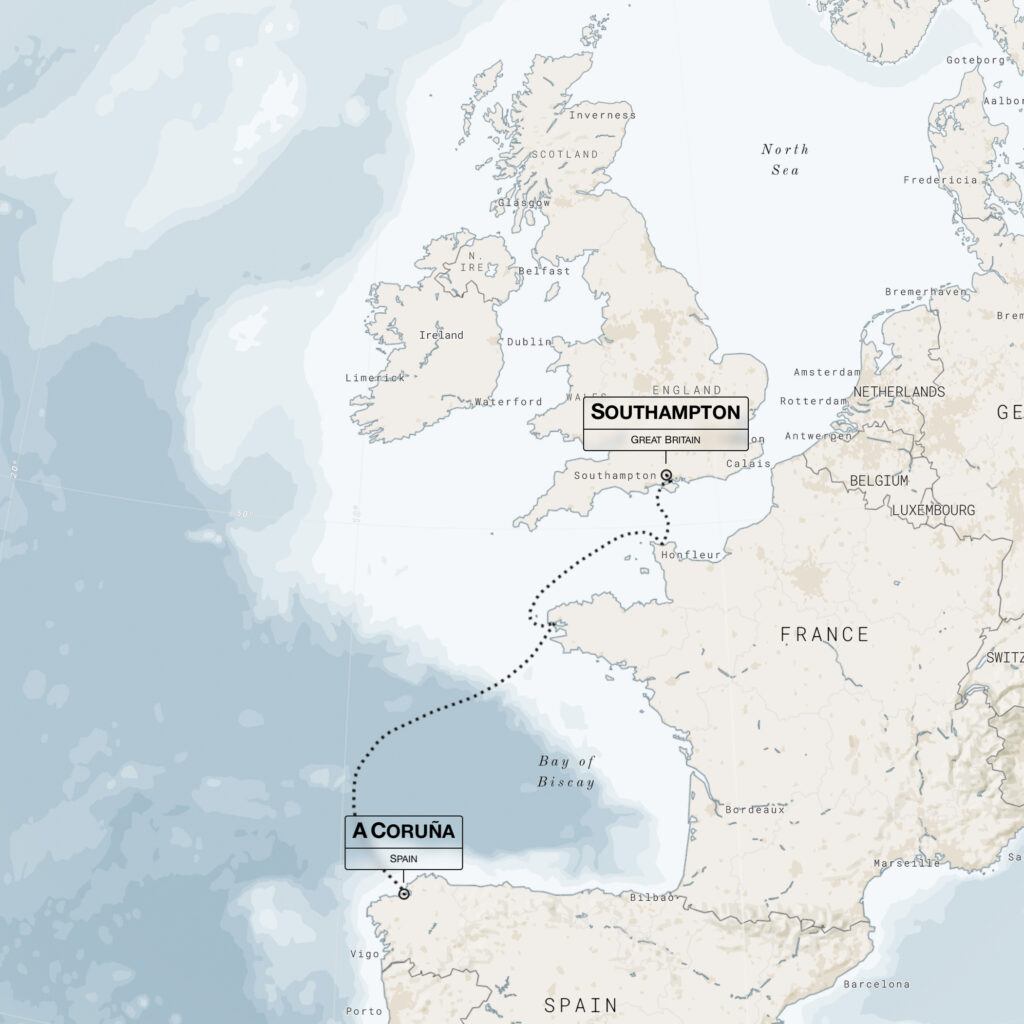

Crossing the Bay of Biscay is a highlight for many sailors and is the focus of this sailing trip. The route takes us approximately 600 nautical miles from Southampton, across the English Channel, to A Coruña.
In the first phase, we prepare for the Bay of Biscay in the Solent and the English Channel. To begin, we practice essential maneuvers in the Solent, including man-overboard drills. Strong tidal currents, large tidal ranges, and heavy traffic in a confined space demand precise navigation from the outset. Cowes is a good choice for our first stop. On our way across the English Channel, for example to Cherbourg, we cross busy shipping lanes and navigate by the tidal current. The goal is to find a position where the wind and time are favorable for crossing the Bay of Biscay. Depending on the weather, Brest or Falmouth at the western end of Cornwall are suitable options.
When crossing the Bay of Biscay, the weather determines when we set sail and which course we choose. At this time of year, we can expect strong winds. If they blow from the west, a high swell builds up on the Bay of Biscay. We avoid this swell whenever possible by choosing our course, as we handle strong wind scenarios very responsibly. This is precisely what makes the crossing a special sailing challenge. Because we analyze the forecasts together, you'll learn weather navigation in practice on board and be involved in the route decisions.
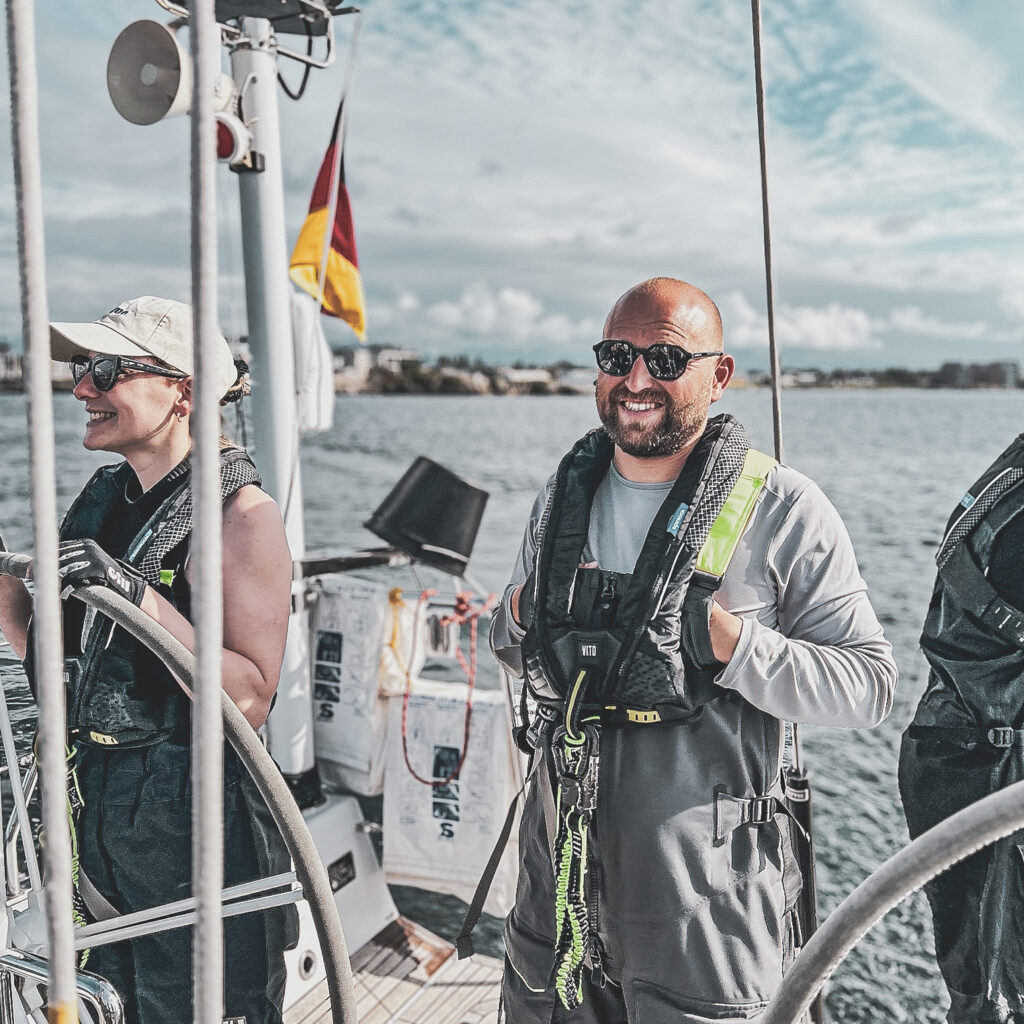
We'll cross the Bay of Biscay in a multi-day, non-stop leg, sailing day and night on a watch system. Together with the crew, you'll be at the helm, navigating and taking on responsibilities on deck. This way, you'll gain genuine offshore experience and valuable nautical miles for your logbook. The SY Imagine offers the highest levels of safety and seaworthiness, even when the sea gets rough. With its carbon rig, it ensures speed and pure sailing pleasure.