

Are you looking for practical experience in heavy weather, tides, and at night?
Mastering tidal navigation
In the English Channel, the North Sea, and the Irish Sea, currents and tidal ranges determine every leg of the journey. You calculate the tides, consult the tide tables for lock passages and shallow harbor approaches, and determine the tidal current using a current atlas—all on board and in practice, because the next leg depends on it.
Experiencing strong winds
Heavy weather sailing in the North Sea, tidal navigation in the English Channel, harbor approaches at night: On our offshore passages, you'll experience precisely the conditions that don't typically arise during skipper training. Each leg puts you in situations where you have to make your own decisions and take action.
take responsibility
With us, you're an active part of the crew from day one: In our watch system, you'll rotate between helmsman, navigator, deckhand, and watch leader, taking on specific tasks in each role. Want to steer a harbor maneuver yourself or delve deeper into navigation? Let us know, and we'll support you.
Good to know
Maneuver training
Before every sailing trip, we dedicate a full day to maneuvers, safety, and emergency procedures. This includes man-overboard drills with a life-size dummy and a real rescue, just as it would be done at sea. Everyone on board learns about the yacht, the equipment, and their role. After that, the crew knows what's important, and we set sail with confidence.
Non-stop stages
Our sailing trips are one-way passages, where we sail non-stop for 2 to 3 days, and considerably longer on the Atlantic. Night sailing on a watch system and approaching harbors in the dark are therefore part of every sailing trip. You'll learn what lighthouses, traffic, and fatigue feel like at night, and how to navigate safely nonetheless. These are precisely the hours that will advance your sailing skills the most.
Heavy weather sailing
Strong winds are part of the program on our routes through the North Sea, the English Channel, the Bay of Biscay, and the North Atlantic. You'll reef, change sails, and stand watch, clipped into your lifebelt and with clear communication. Two skippers with many years of experience in these sea areas will calmly decide when to ease the pressure on the rig and when to let it run. This way, you'll experience heavy weather sailing as manageable seamanship – safe and competent.
Tidal navigation
You'll learn tidal navigation where it dictates every decision: in the English Channel, the North Sea, and the Irish Sea. You'll calculate current and height, plan departure times according to the tide tables, utilize lock times and shallow harbor approaches, and determine the tidal current using a current atlas. On the Atlantic, weather navigation is added, with route selection based on wind and waves over several days.
Crew Leadership
We place the utmost importance on mindful crew leadership and respectful interaction. Our principle is: volume is no substitute for competence. You won't hear any shouting on board; in all weather conditions, we communicate with agreed-upon hand signals between the cockpit and the bow. Everyone is welcome and encouraged to ask questions, and mistakes are discussed to learn from them, but never to embarrass anyone. As watch leader, you will lead your watch in precisely this manner, and in just a few days, the crew will bond into a cohesive unit.
Nautical mile confirmation
As an official organizer, you'll receive a recognized certificate of mileage at the end, including the sailing area, nautical miles, and dates, signed by the skipper. Our routes typically include legs significantly longer than 60 nautical miles, with night sailing and tidal navigation. Those working towards the SSS, SHS, British sailing certificate, or Swiss offshore certificate will take on a significant responsibility with us: trip planning, tide calculations, maneuvers, and watch management, with two experienced skippers who will challenge you and provide feedback.
Your questions
Do I need a license to sail?
Your attitude is more important than a certificate. Longer non-stop legs in strong winds can be demanding; the will and enthusiasm for active sailing count for more than qualifications. Even without offshore experience, we'll integrate you into the watch system so that you feel safe. We'll cover any knowledge gaps within the team, and you'll learn naturally on board.
How much navigation and control do I do myself?
As much as you like. In the watch system, duties rotate: you'll take turns as helmsman, navigator, deckhand, and even watch leader. We steer manually, which keeps you alert and focused, especially at night. Want to steer a harbor maneuver yourself or plan the next leg of your journey? Let us know, and we'll support you in achieving your sailing goals.
What happens in strong winds?
We continue sailing, with a plan and with safety in mind. You reef, change sails, and stand watch, clipped into your lifebelt, while two experienced skippers calmly decide how much sail the yacht can carry and explain why. It is precisely from these hours that you will learn the most seamanship.
Do we really sail at night too?
Yes, on every sailing trip, and for several nights in a row, you'll be on watch. You'll stand watch, steer by compass and lighthouses, and navigate harbor approaches yourself in the dark. The watch system primarily guarantees rest periods, because on multi-day passages, regular sleep is key to safety and good spirits.
Which banknote are the miles valid for?
For the SSS and SHS, for the British sailing license and for the Swiss offshore certificate. For the SSS you need 1,000 nautical miles, for the SHS another 1,000 as watch leader, for the offshore certificate 1,000 nautical miles and for the British sailing license 2,500, half of which must be in tidal waters. Our passages take us through the North Sea, English Channel, Irish Sea, Bay of Biscay and Atlantic Ocean, and the skipper's mileage confirmation verifies this.
Can I get personal advice before booking?
Yes, gladly. Just send us a message via WhatsApp telling us what experience you have and what you want to learn on board. We'll reply personally within one day and tell you which sailing trip suits your skill level. You can reserve your berth for 10 days free of charge and without obligation.
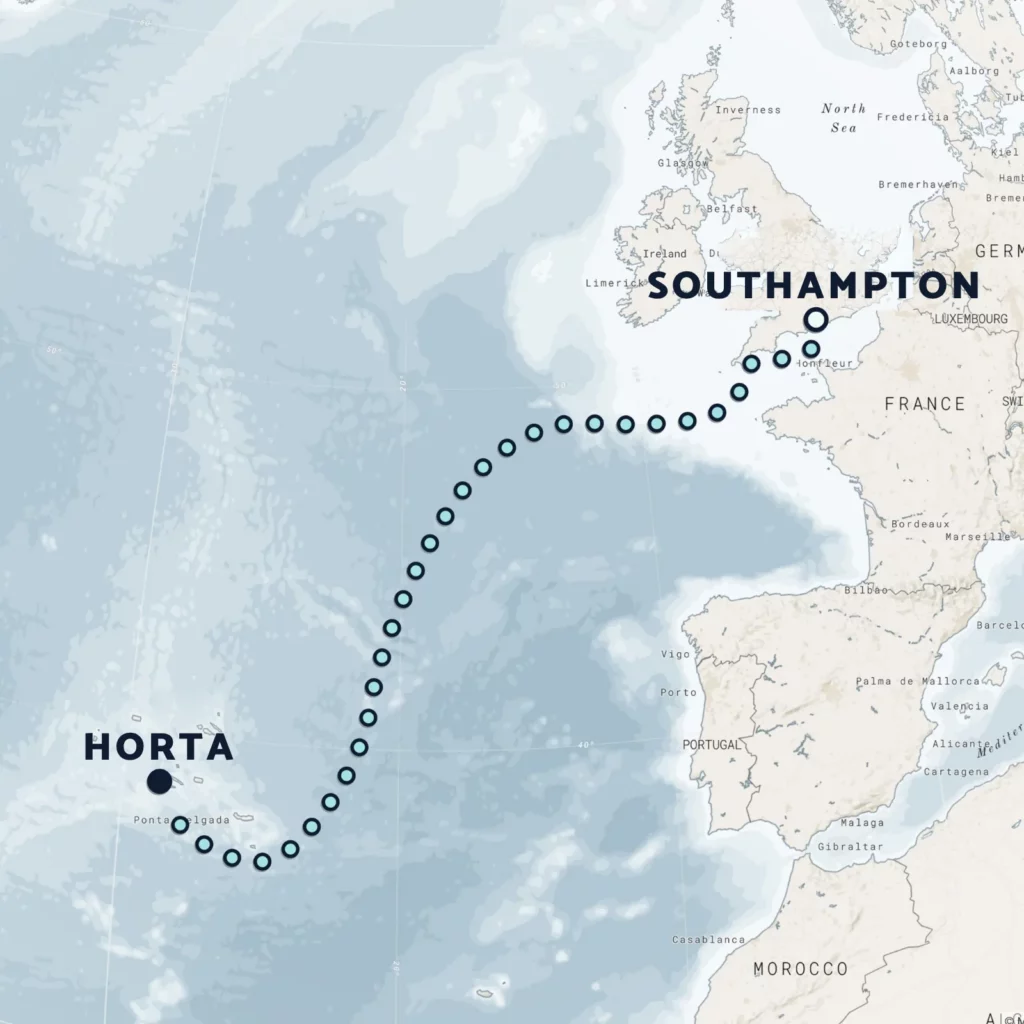
Atlantic Challenge
- ~ 1,600 nm
- 17 days
- Ocean
–
- 8 free berths
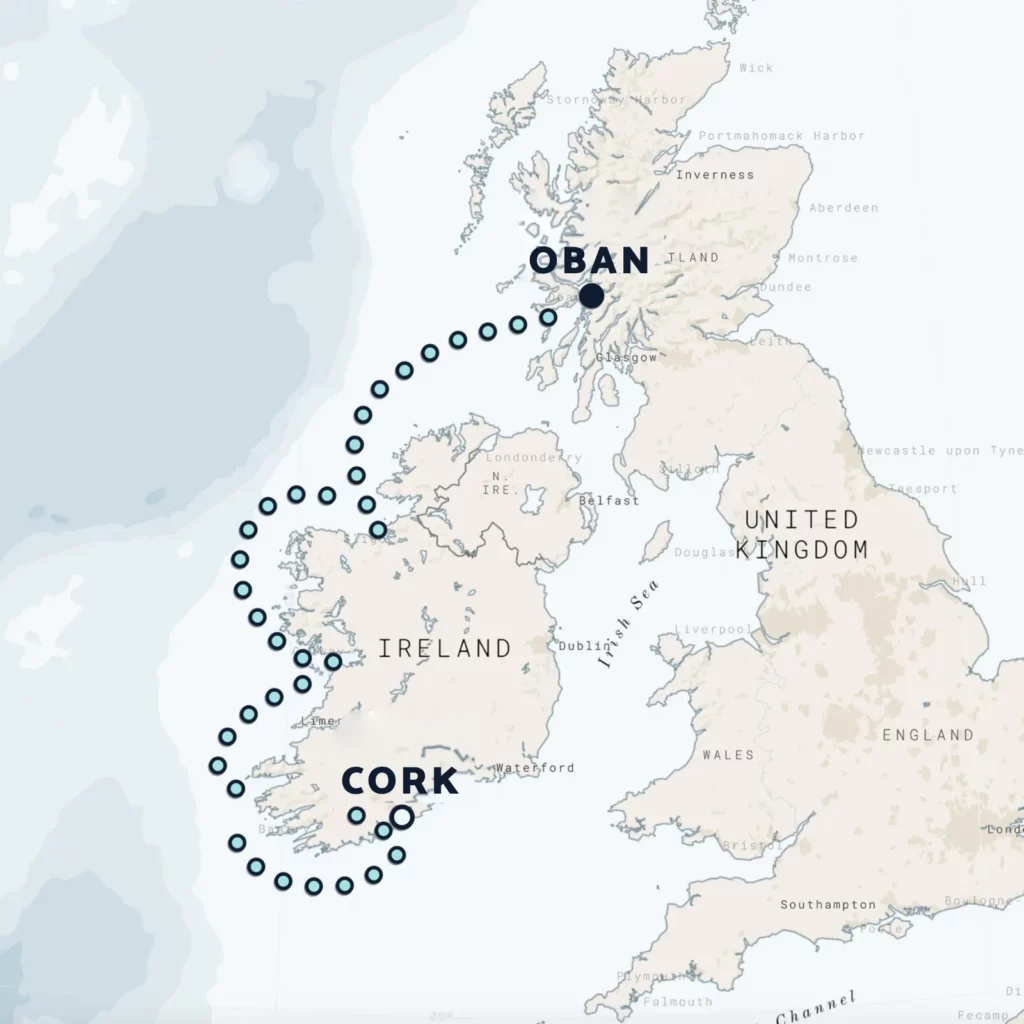
Round Ireland
- ~600 nm
- 11 days
- Offshore
–
- 5 free berths
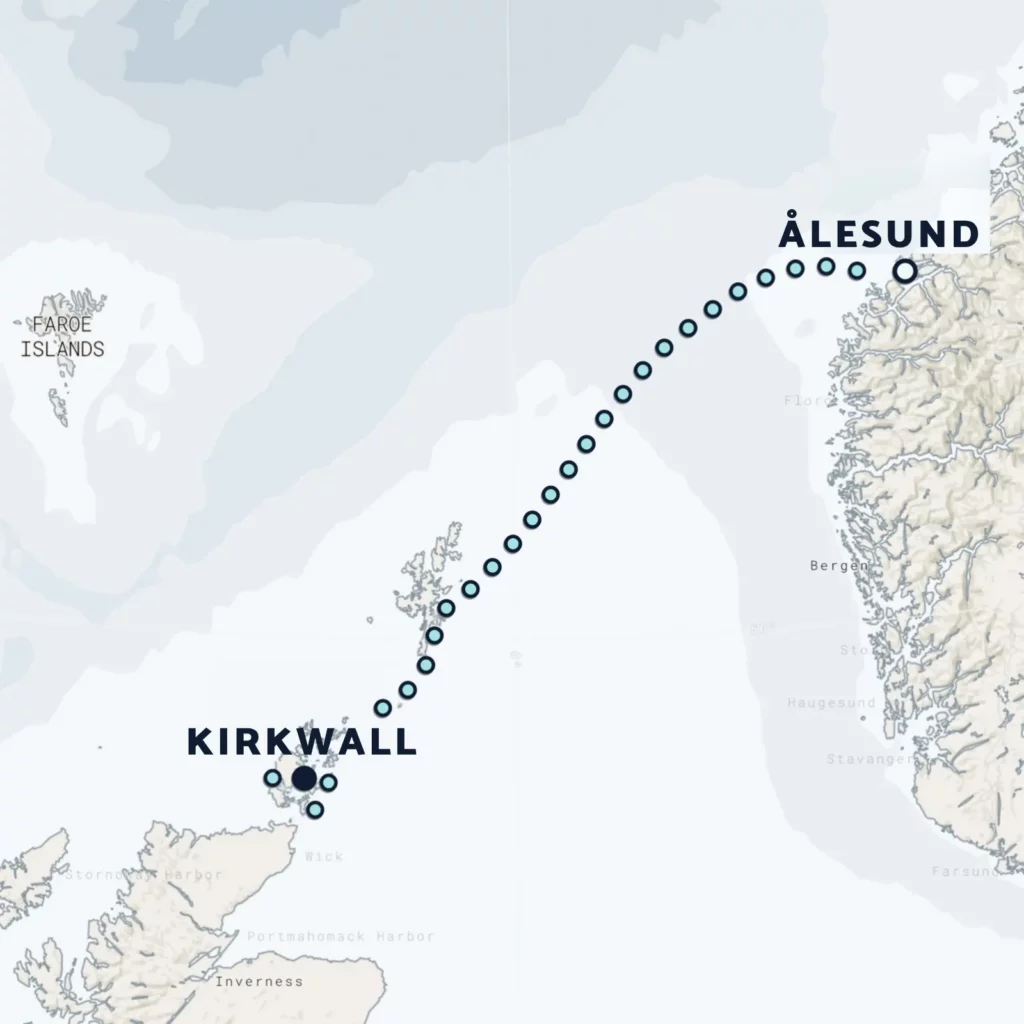
Celtic Islands
- ~ 400 nm
- 11 days
- Offshore
–
- 8 free berths
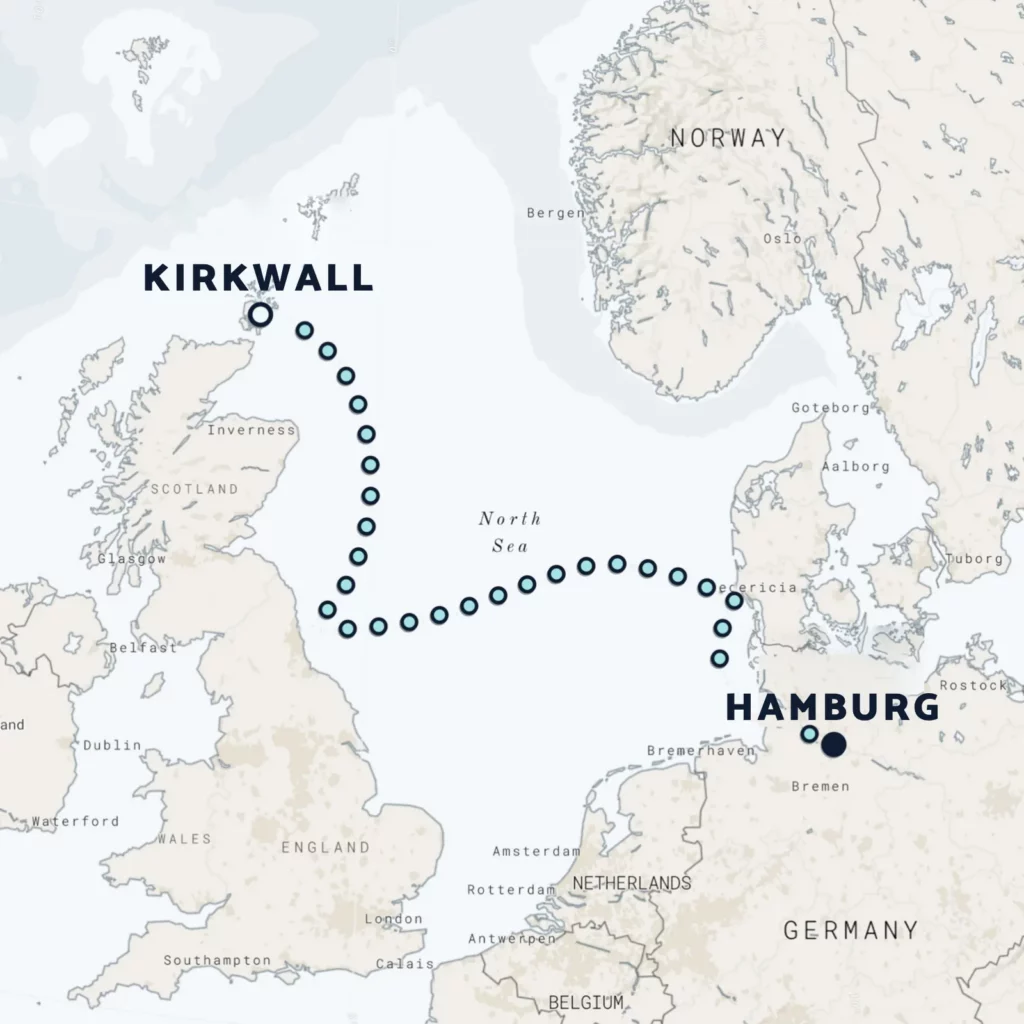
North Sea
- ~ 800 nm
- 11 days
- Offshore
–
- 8 free berths
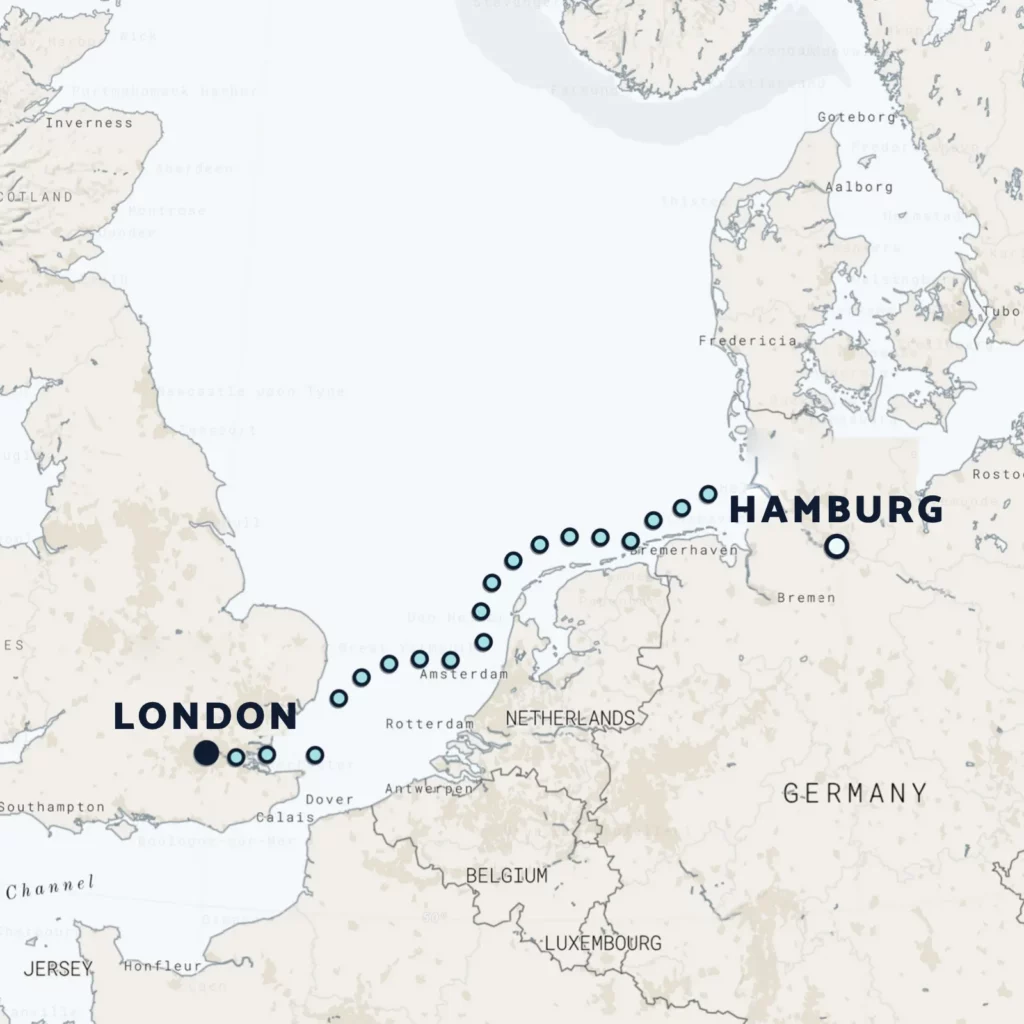
London Calling
- ~ 500 nm
- 10 days
- Offshore
–
- 8 free berths
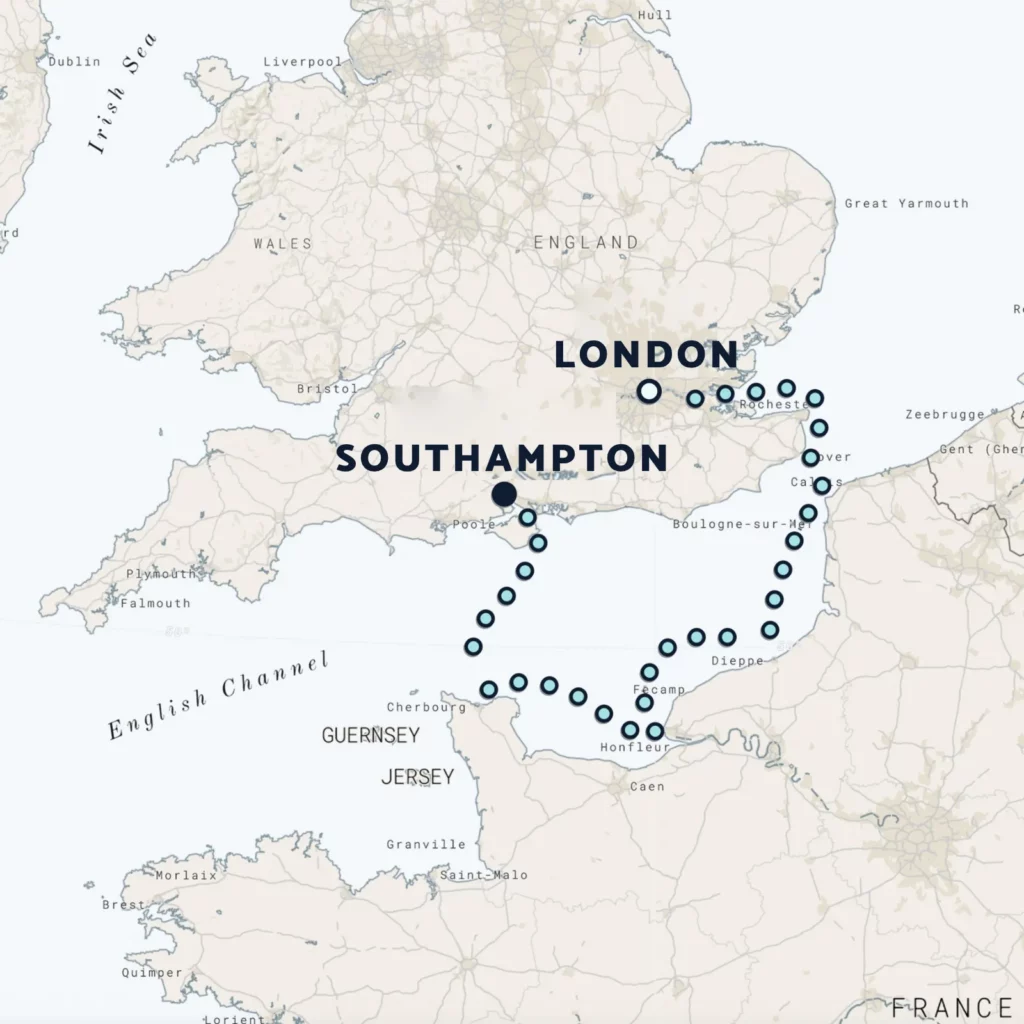
English Channel
- ~ 400 nm
- 10 days
- Offshore
–
- 7 free berths
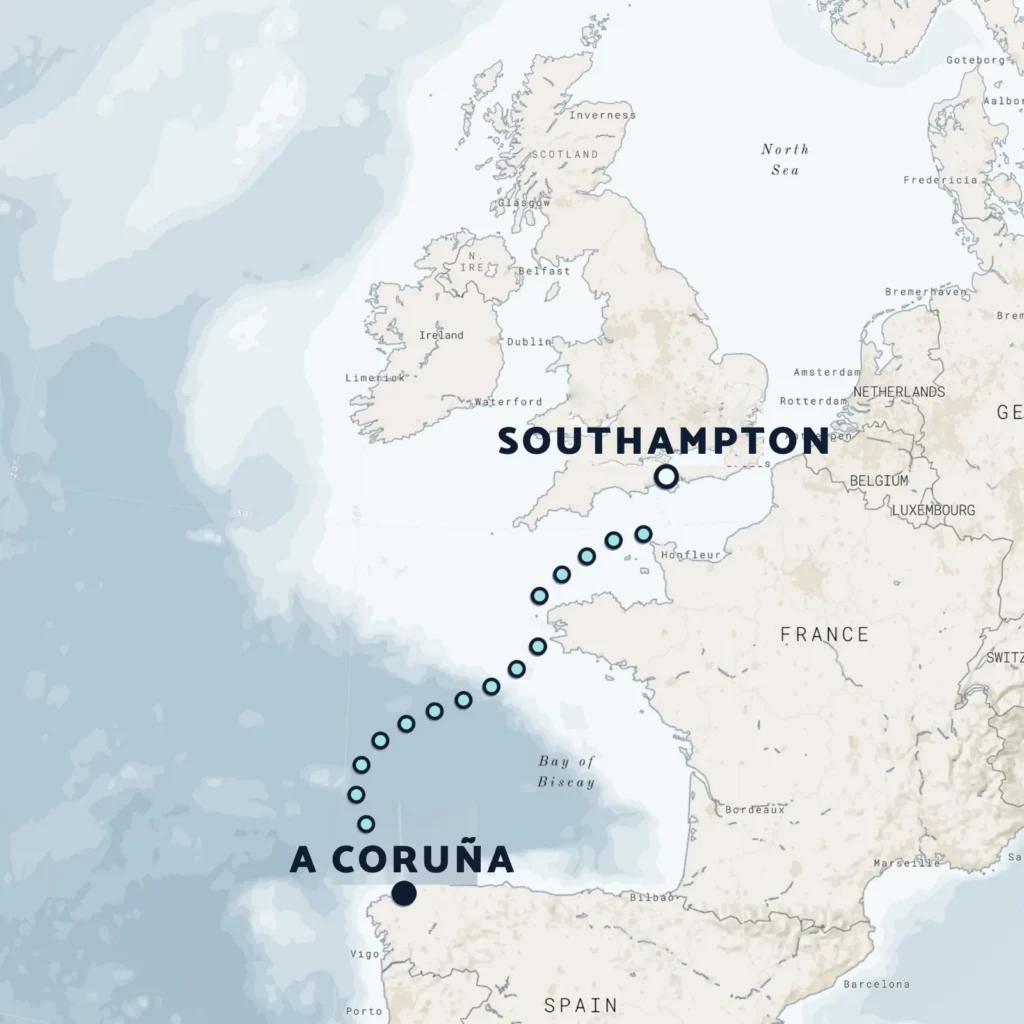
Biscay Crossing
- ~ 600 nm
- 13 days
- Ocean
–
- 6 free berths
Live Tracker
Move around on the interactive map!
🗺️ Route planning
All planned routes will be under TRIPS Introducing our sailing trips. We sail from the northernmost to the southernmost point of Europe on individual one-way routes. Click on a route and learn more about your next sailing trip.
👣 Live tracking
Follow SY Imagine live during the sailing trips. (At) TRACKS We showcase all our sailing trips. Our current track is recorded along with the ship's position during the trip. Satellite communication transmits not only our position, course, and speed, but also the current weather conditions.

