Do you want to log a lot of nautical miles in a short time?
Earn miles
Few vacation days but still want to rack up plenty of miles? Our offshore sailing trips are one-way passages, where we often sail non-stop for 2 to 3 days at a time, and considerably longer on the Atlantic. This way, you can accumulate nautical miles in two weeks that would take you years to cover with daily sailing, and you can easily meet the 1,000 nautical miles required for a sailing certificate with just one or two trips.
Sailing at night
In the watch system, you stand watch at night, steer the yacht manually using a compass and lighthouses, and enter ports even in the dark. Night sailing and approaching unfamiliar ports in the dark are almost always new and exciting experiences for the crew, and these hours are later recorded in your mileage confirmation.
guard system
We divide the crew into fixed teams and watch schedules. During your watch, the tasks rotate: you'll alternate between being helmsman, navigator, deckhand, and watch leader. This system primarily regulates rest periods, because regular sleep is key to safety and good morale on multi-day passages.
Good to know
Non-stop stages
Before every sailing trip, we dedicate a full day to maneuvers, safety, and emergency procedures. This includes man-overboard drills with a life-size dummy and a real rescue, just as it would be done at sea. Everyone on board learns about the yacht, the equipment, and their role. After that, the crew knows what's important, and we set sail with confidence.
Non-stop stages
Our sailing trips are one-way passages, where we often sail non-stop for 2 to 3 days at a time, and on the Atlantic for around 7 days or more continuously at sea. This means we cover nautical miles in two weeks that would take you years to cover at daily paces. The nautical miles listed on the sailing trip pages are estimated guidelines from our route planning; we often cover more at sea.
Night journeys
On every sailing trip, we sail several consecutive nights on a watch system. You'll stand watch, steer by compass and lighthouses, observe traffic, and navigate harbor approaches in the dark. Especially on long night passages, taking the helm is an integral part of every watch and helps maintain the rhythm. These night passages will later be recorded in your mileage log.
navigation
You navigate using tides, weather, and traffic, spending several days at sea without land in sight. In the English Channel and the North Sea, you calculate the tides, consult tide tables for lock passages and shallow harbor approaches, and determine the tidal current using a current atlas. On the Atlantic, weather navigation is added to the mix, requiring route selection based on wind and waves over several days.
Crew Leadership
As watch leader, you lead a watch, make decisions on deck, and ensure a smooth handover to the next watch. We practice crew leadership based on mutual respect: calm, proactive, and appreciating every contribution. With a maximum of 8 crew members and a fixed single berth on a sporty performance sailing yacht, everyone has plenty of time at the helm and navigating.
Nautical mile confirmation
Each passage adds many nautical miles to your trek in a relatively short time. These passages take place in tidal waters and include night sailing, all documented in the skipper's mileage confirmation. This confirmation is valid for the SSS, SHS, British sailing certificate, and Swiss offshore sailing license. If you're working towards one of these licenses, you'll take on the role of skipper trainee with us, responsible for trip planning and yacht handling under supervision. This is the final preparation you need before obtaining your own license.
Your questions
For which certificate do the nautical miles count?
For SSS and SHS licenses, for the British sailing certificate and the Swiss offshore sailing certificate. Our passages cover the North Sea, English Channel, Irish Sea, Bay of Biscay and Atlantic Ocean, including night sailing, tidal navigation and watchkeeping. The skipper's mileage confirmation documents the sailing area, nautical miles, and time period.
How many nautical miles can I cover per sailing trip?
We cover a relatively large number of miles in a short time because we combine three things: one-way routes across the open sea, a fast, high-performance sailing yacht, and a crew specifically trained for this purpose. We sail for several days and nights at a time using a watch system. The nautical miles listed on the sailing trip pages are guidelines based on planning; we often cover more at sea. You can complete the 1,000 nautical miles required for a sailing certificate with one Atlantic crossing or with two sailing trips in the North Sea, the English Channel, and the Bay of Biscay.
Do I need to have experience?
Your attitude is more important than a certificate. Longer non-stop legs in strong winds can be demanding; the will and enthusiasm for active sailing count for more than qualifications. Even without offshore experience, we'll integrate you into the watch system so that you feel safe. Many on board gain their first offshore miles with us.
Do we really sail at night too?
Yes, on every sailing trip, and for several nights in a row, you'll be on watch. You'll navigate into harbors yourself in the dark, keeping an eye on lighthouses, traffic, and tides. The watch system manages watch and sleep, ensuring the crew stays rested and safe. Night sailing is the part our crews talk about the most afterward.
Will I receive a confirmation of nautical miles logged?
The logbook, signed by the skipper at the end of each sailing trip, includes the sailing area, nautical miles, and dates. It is valid for the SSS, SHS, British sailing certificate, and offshore sailing license. We fill out and stamp the Swiss sailing logbook together on board.
Can I get personal advice before booking?
Yes, absolutely. We are not an anonymous booking platform, but real sailors. We know that an offshore sailing trip is a special decision where trust is essential.
➼ Availability: The best way to contact us is via WhatsApp or e-mail. Since we are often out sailing ourselves, this is the quickest way to reach us. We will reply as soon as possible – even if we are currently sailing offshore ourselves.
➼ Honesty: In our conversation, we'll work together to determine if our concept is exactly what you're looking for and meets your expectations. If your ideas point in a different direction, we'll tell you openly and gladly recommend suitable alternatives at partner sailing schools.
➼ Get to know: Use dialogue to get to know us and our approach. Ask us your questions – trust is built through communication.
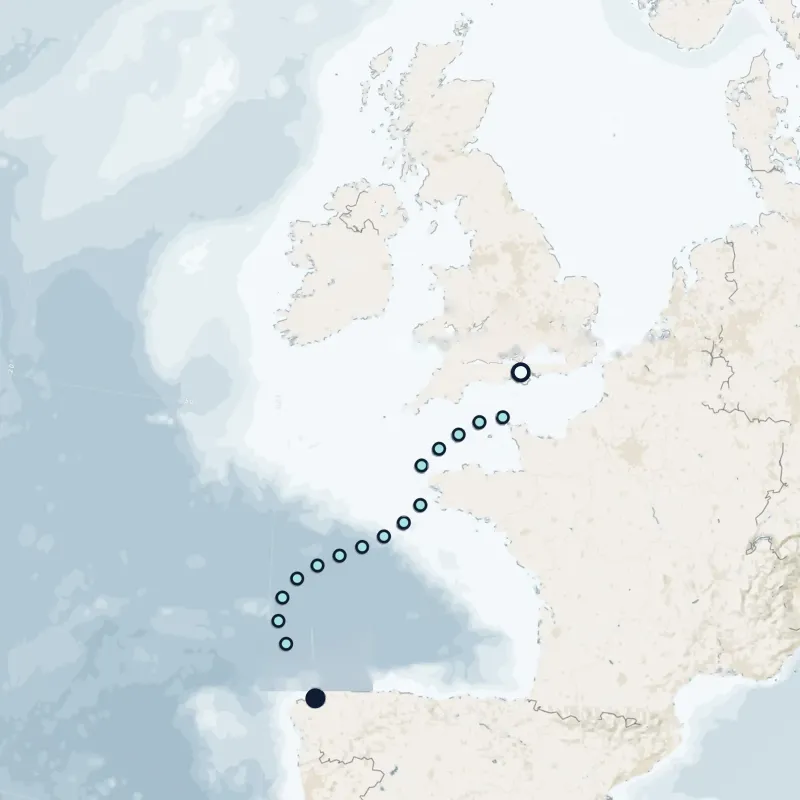
Atlantic Challenge
- ~ 1,600 nm
- 17 days
- Ocean
–
- 8 free berths
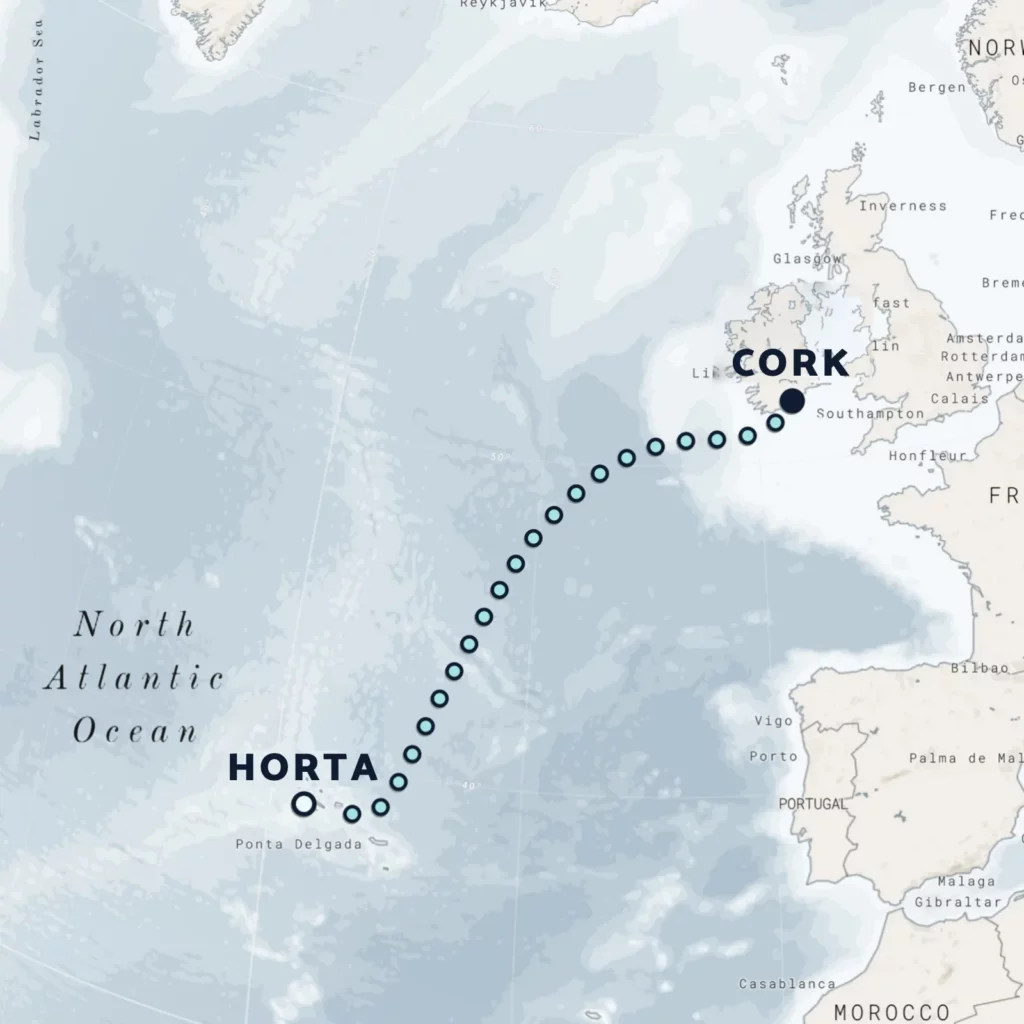
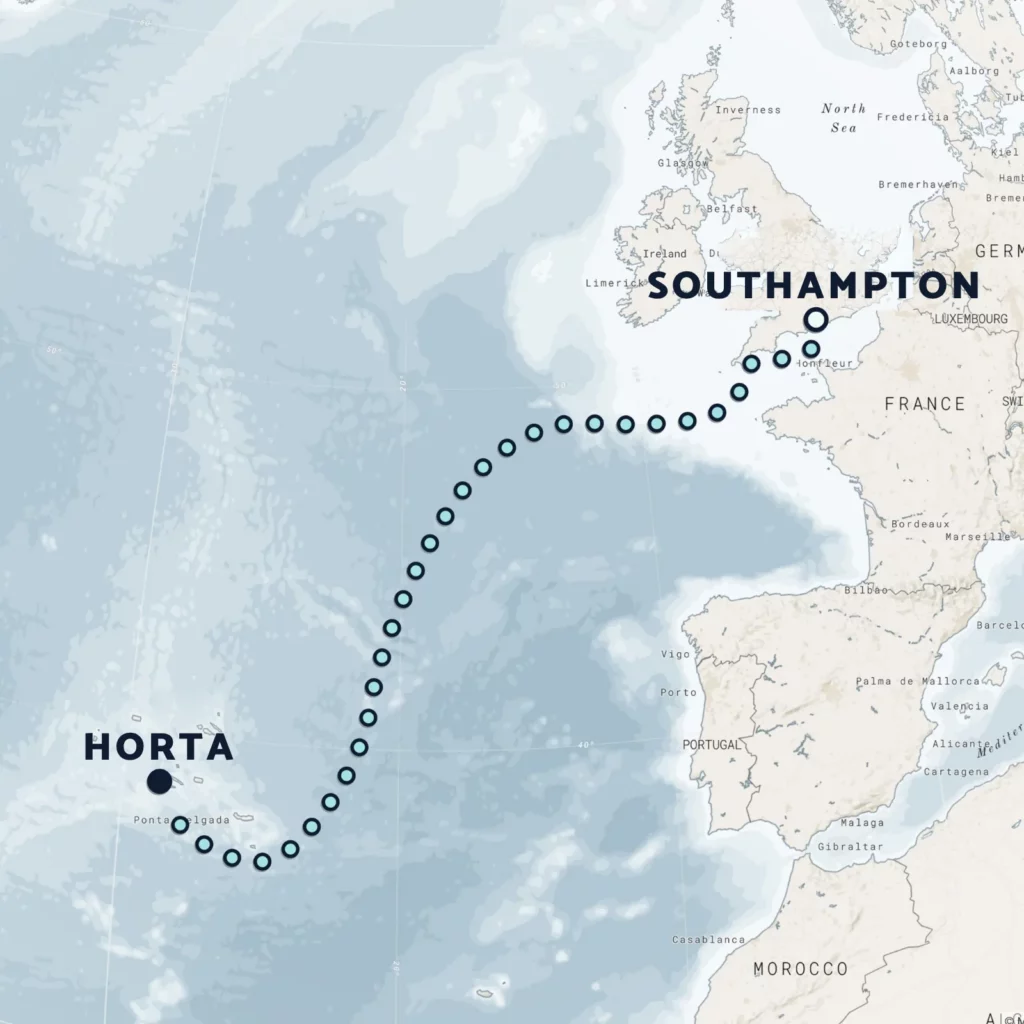
North Atlantic
- ~1,300 nm
- 15 days
- Ocean
–
- 8 free berths
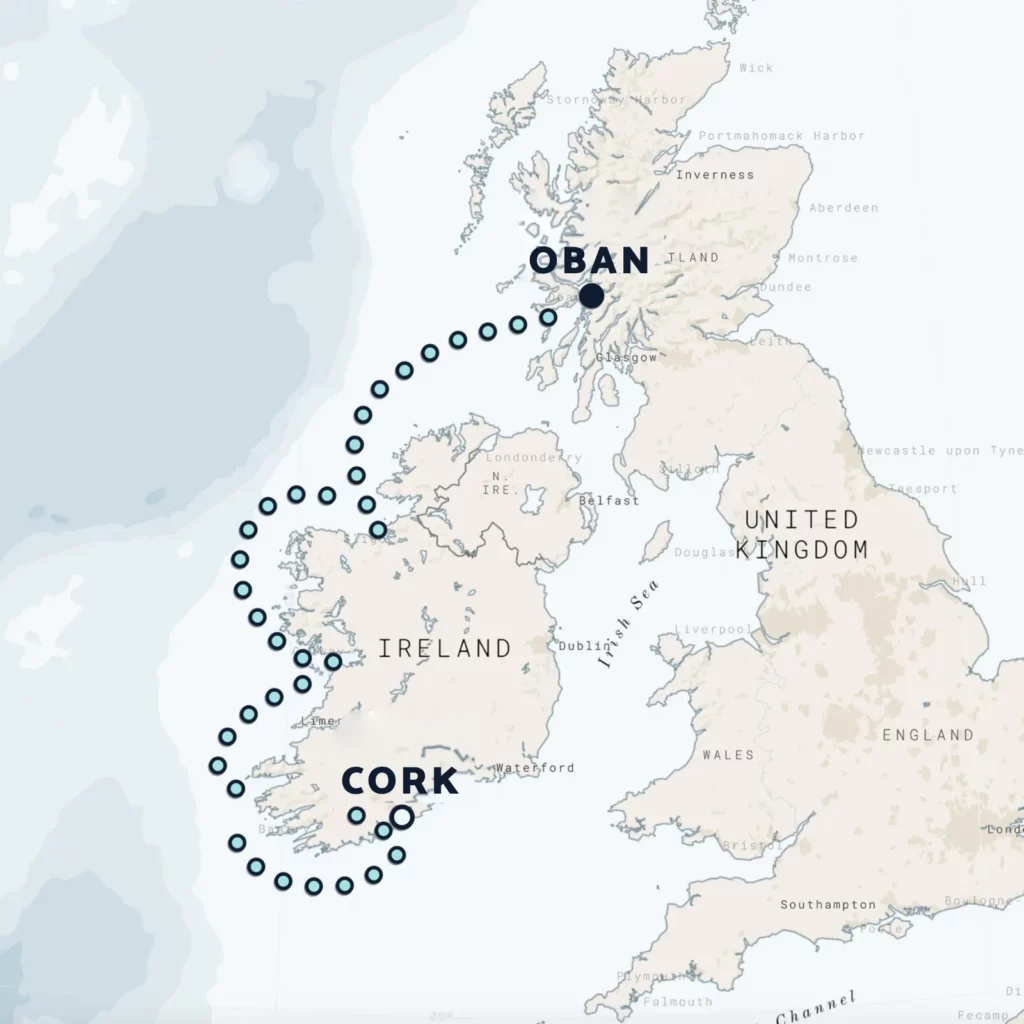
Round Ireland
- ~600 nm
- 11 days
- Offshore
–
- 6 free berths
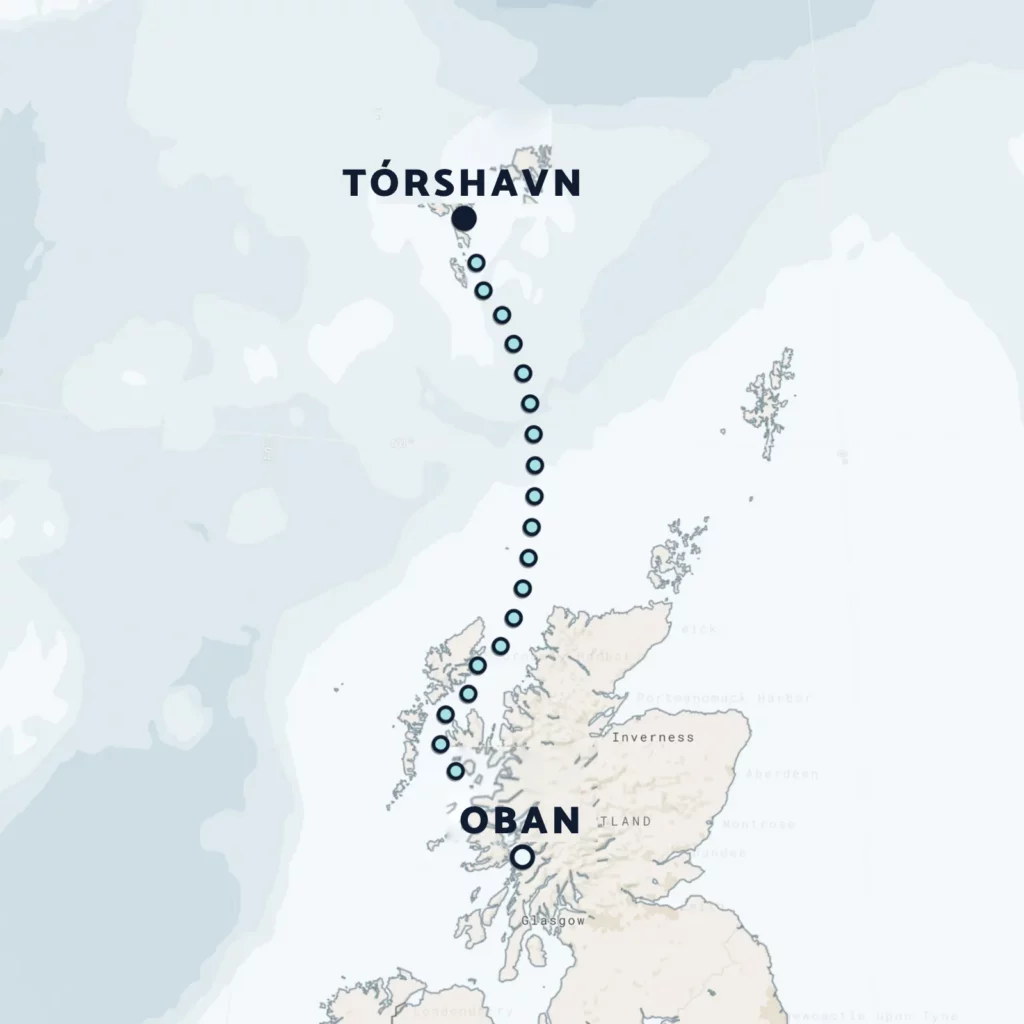
Celtic Coast
- ~ 500 nm
- 11 days
- Offshore
–
- 6 free berths
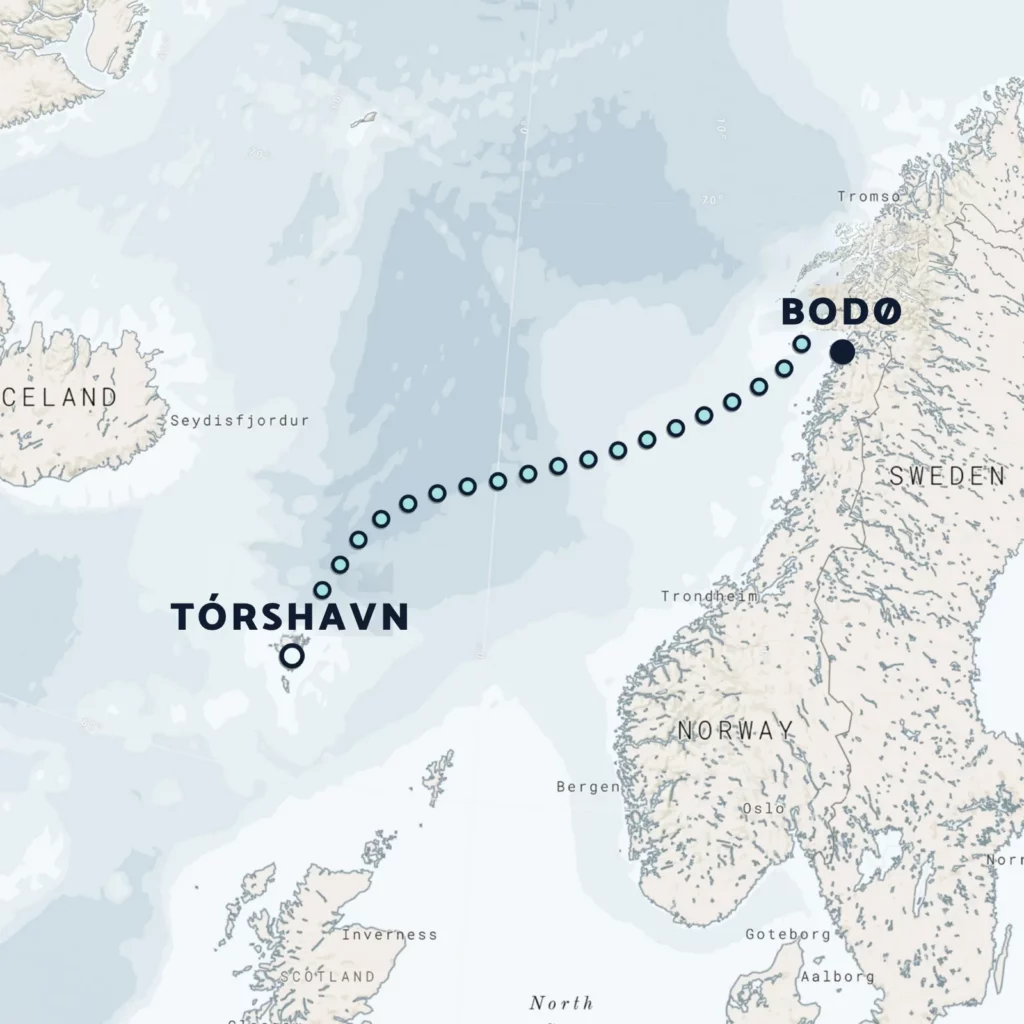
Cold Hawaii
- ~ 700 nm
- 11 days
- Ocean
–
- 8 free berths
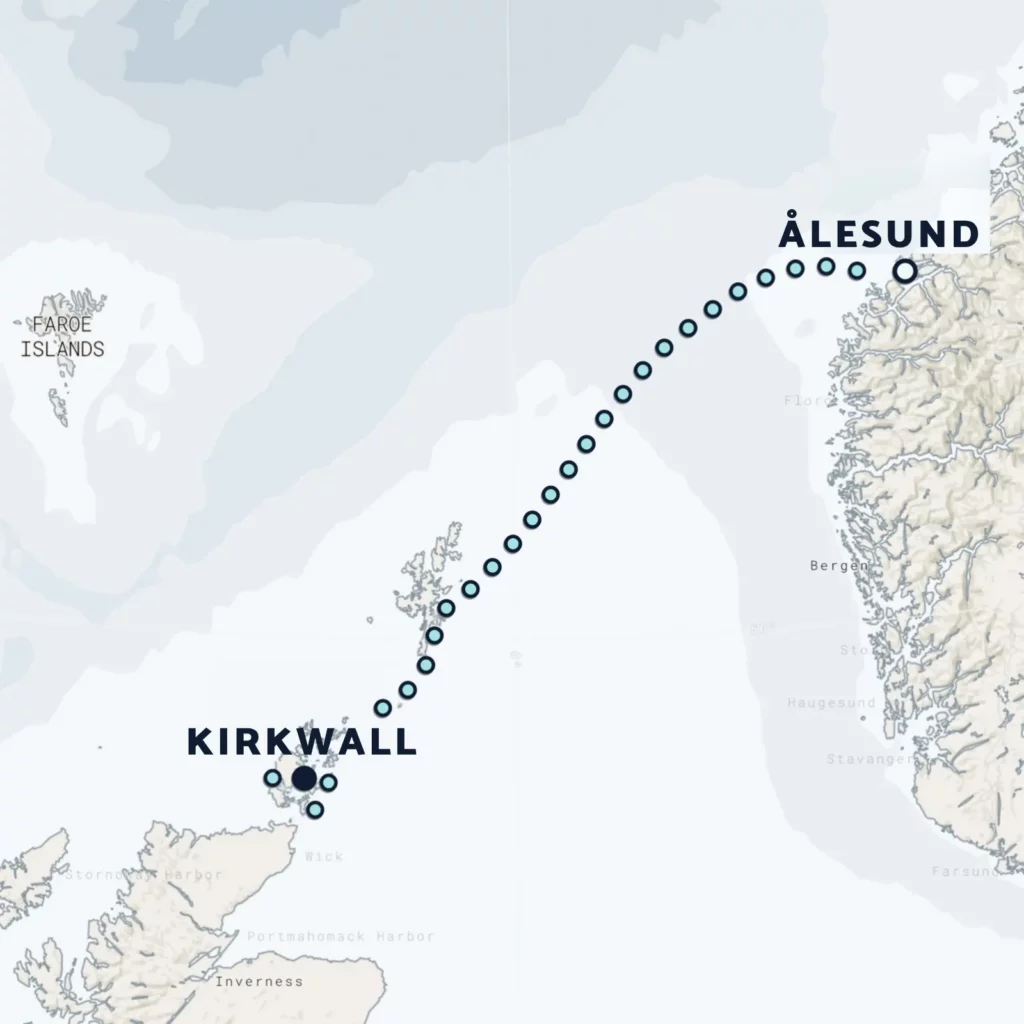
Celtic Islands
- ~ 400 nm
- 11 days
- Offshore
–
- 8 free berths
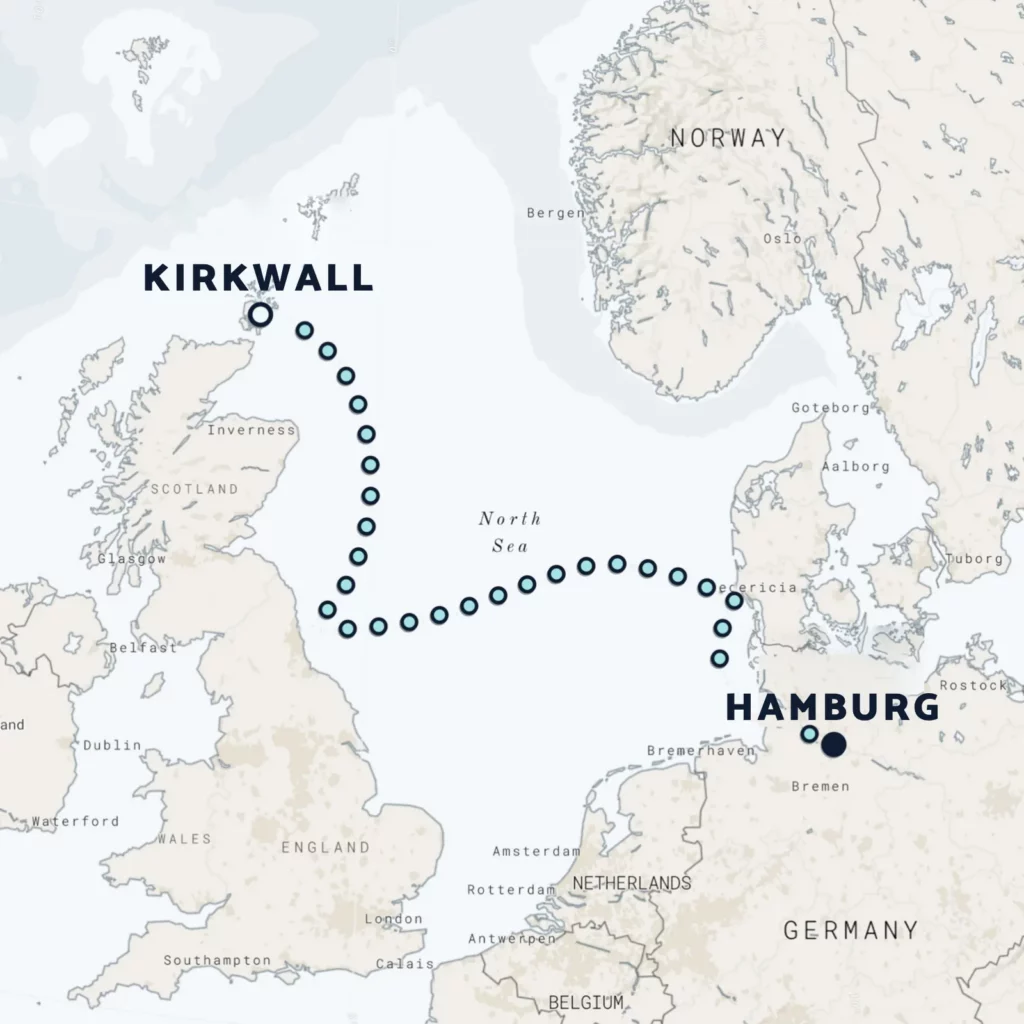
North Sea
- ~ 800 nm
- 11 days
- Offshore
–
- 8 free berths
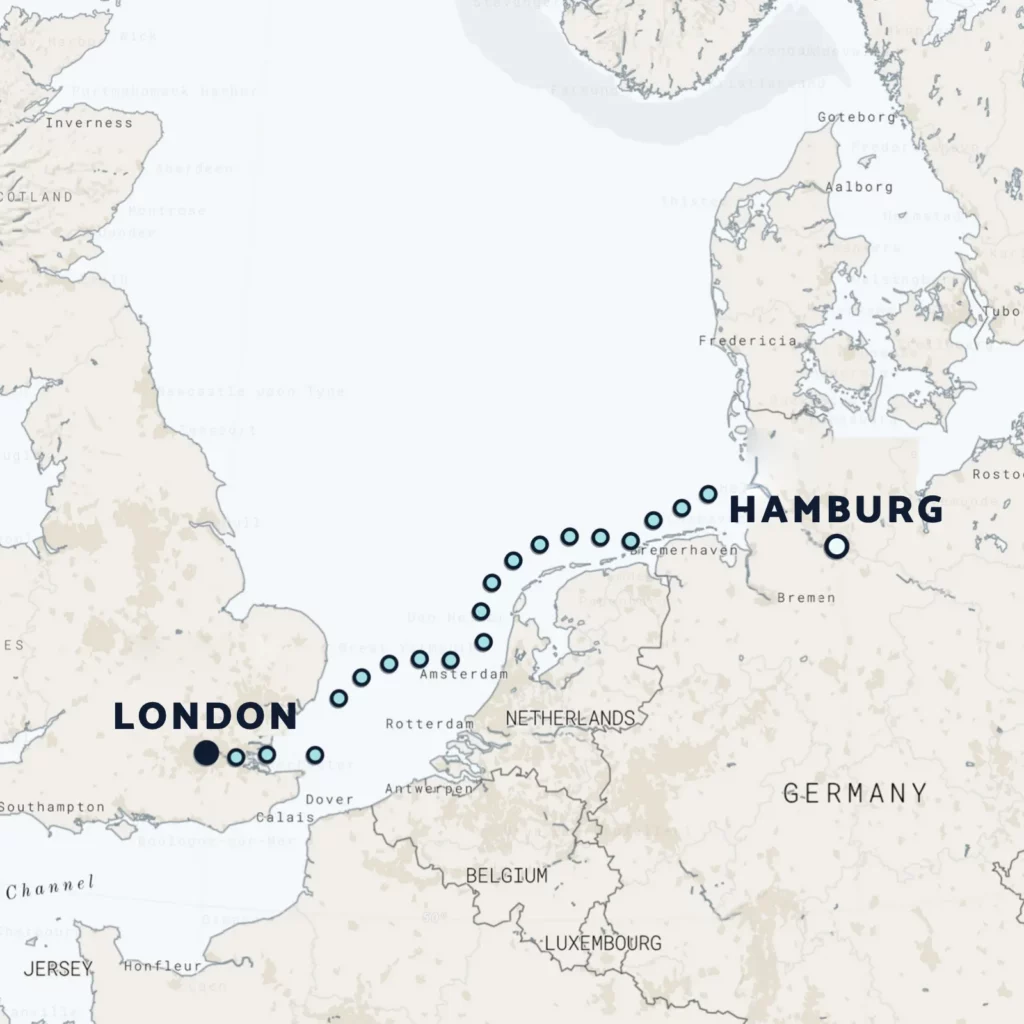
London Calling
- ~ 500 nm
- 10 days
- Offshore
–
- 8 free berths
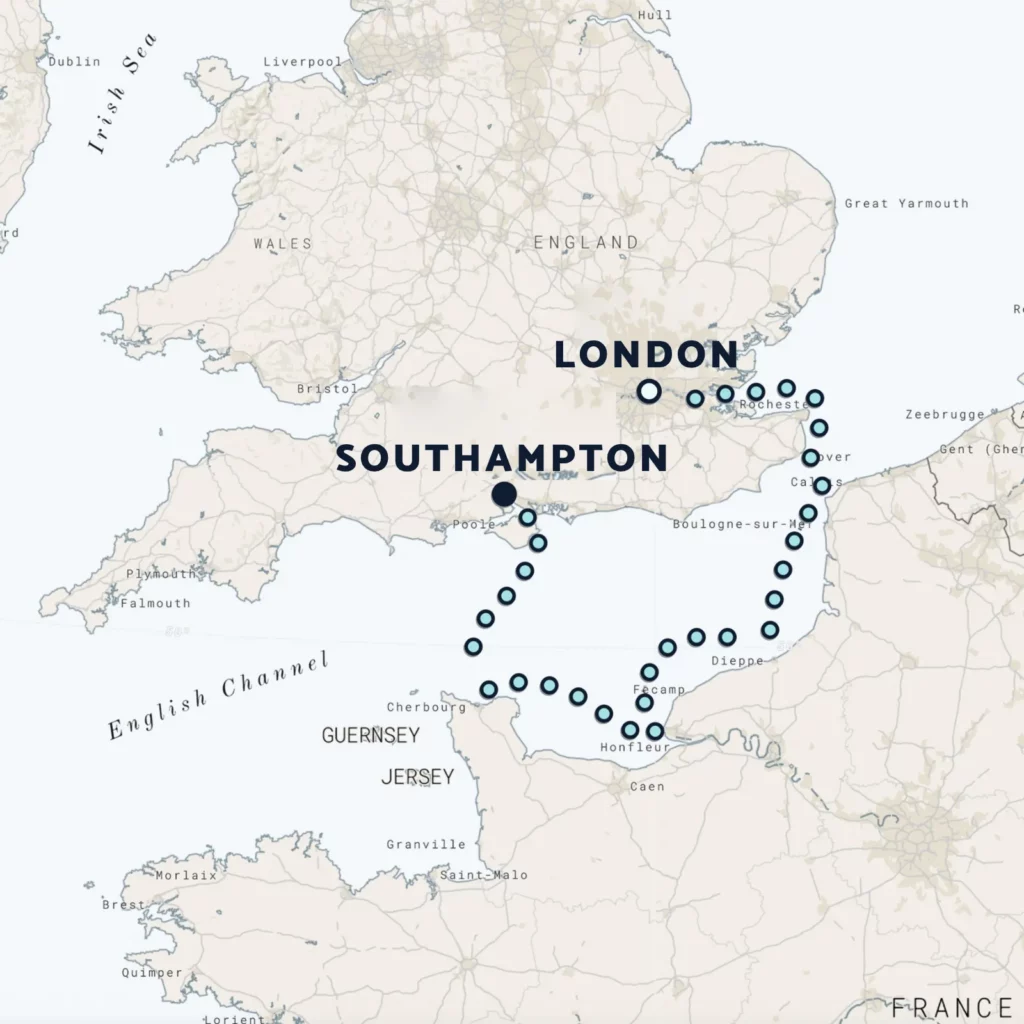
English Channel
- ~ 400 nm
- 10 days
- Offshore
–
- 7 free berths
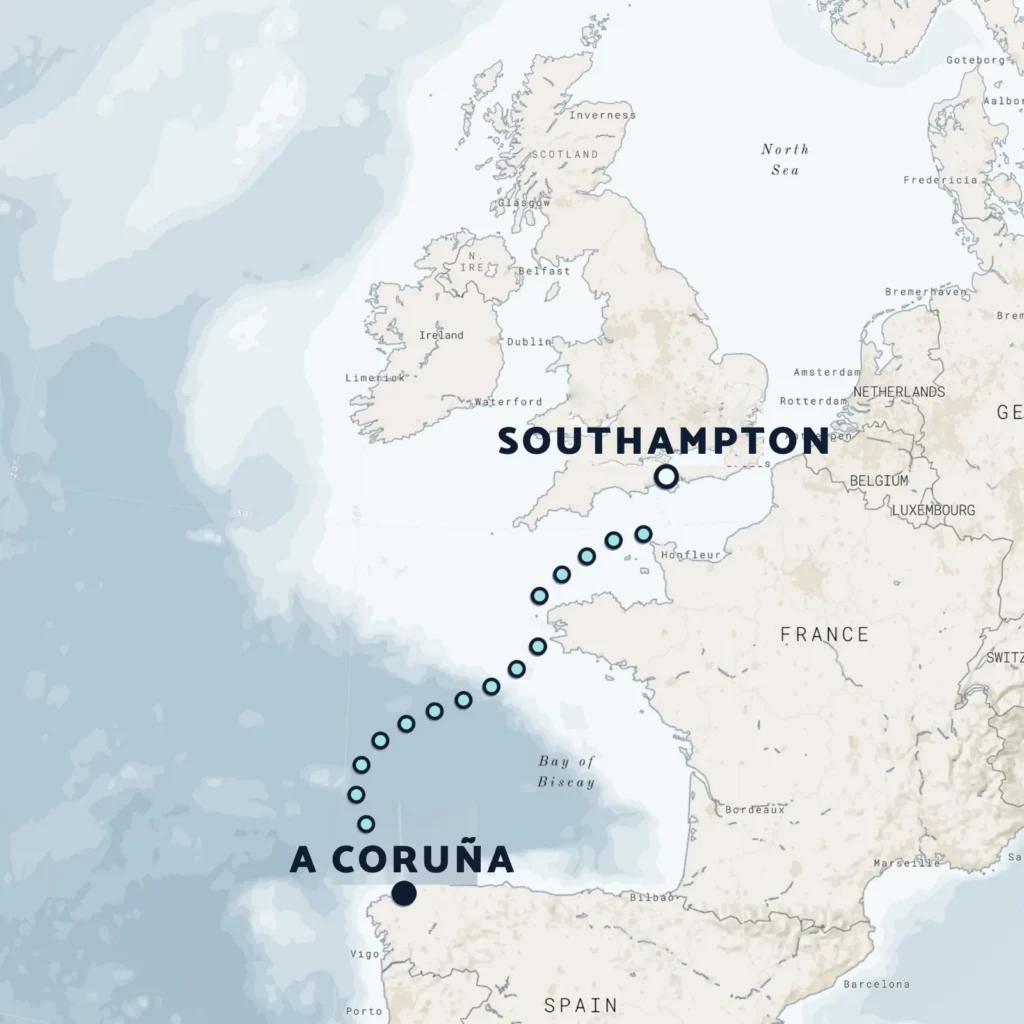
Biscay Crossing
- ~ 600 nm
- 13 days
- Ocean
–
- 6 free berths
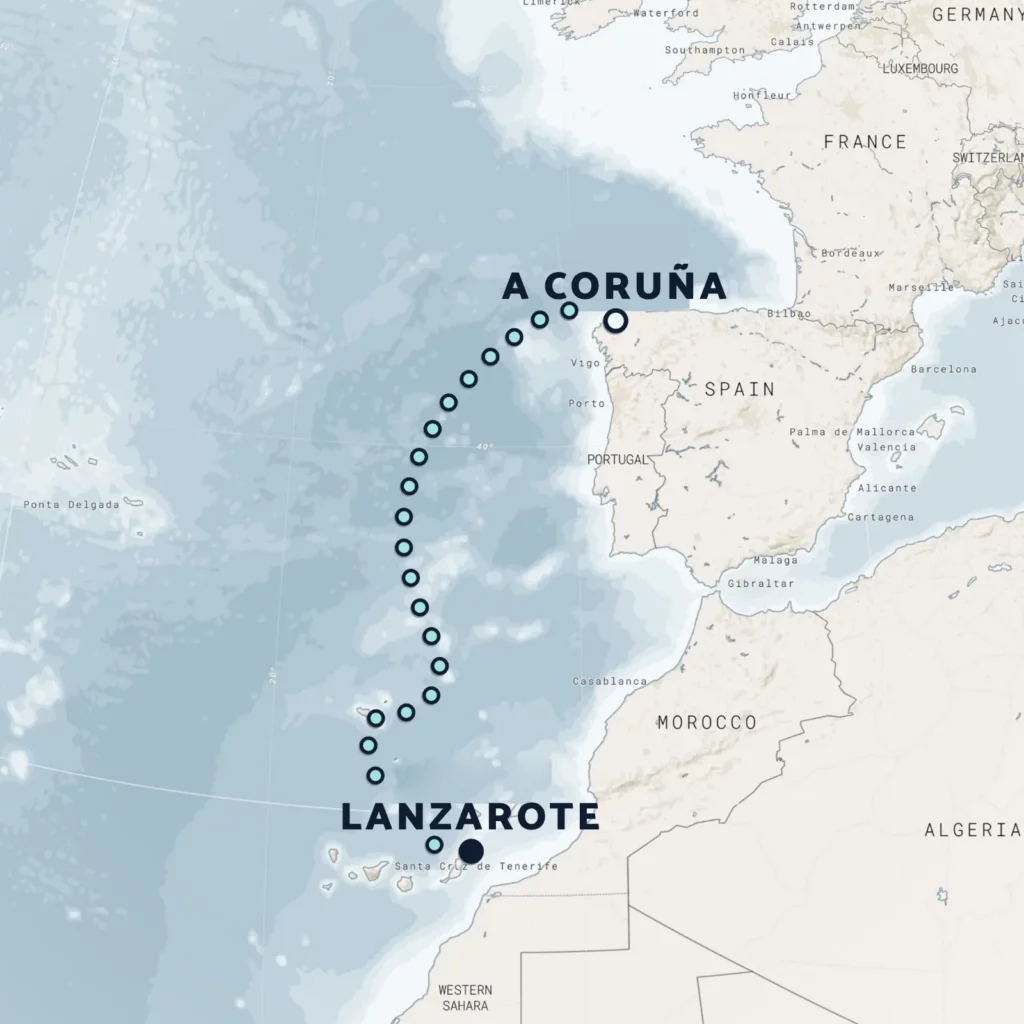
Atlantic Islands
- ~1,200 nm
- 15 days
- Ocean
–
- 8 free berths
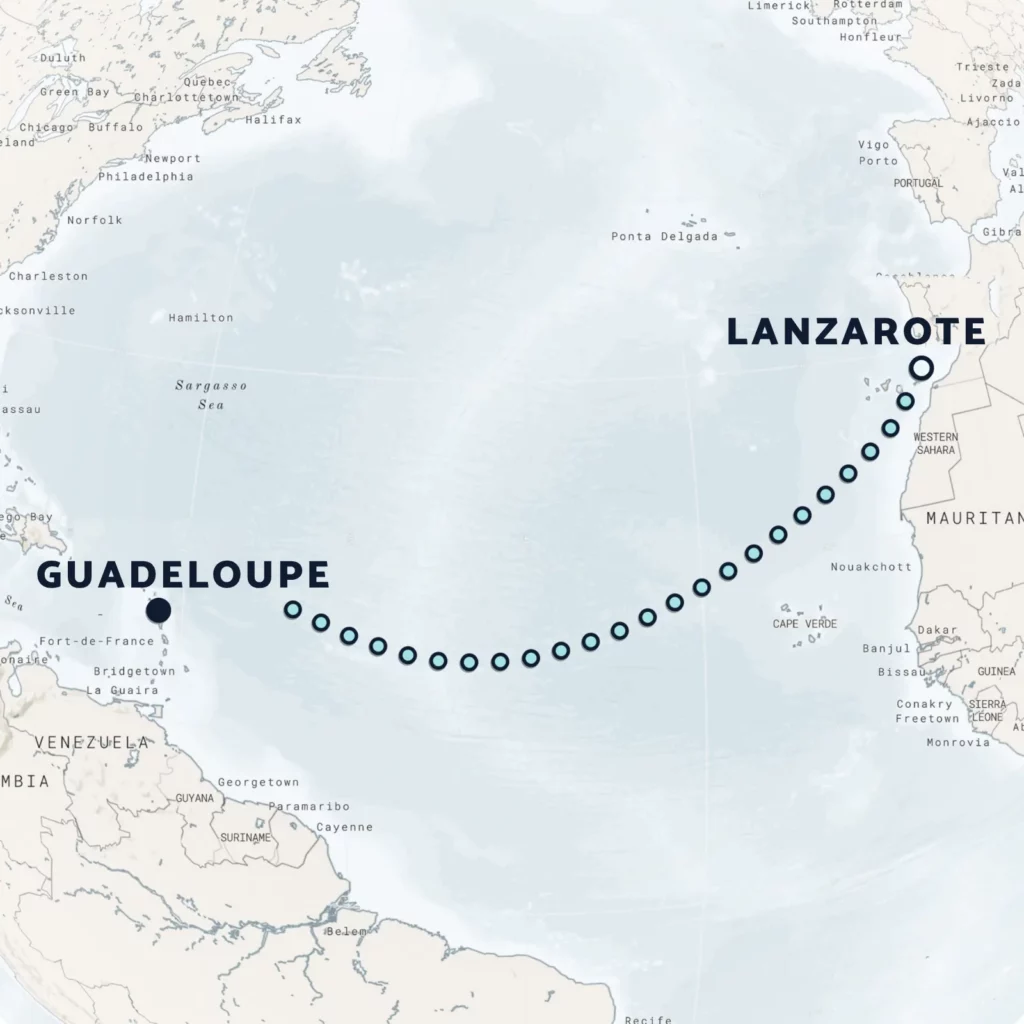
Atlantic Crossing
- ~3,000 nm
- 27 days
- Ocean
–
- 8 free berths
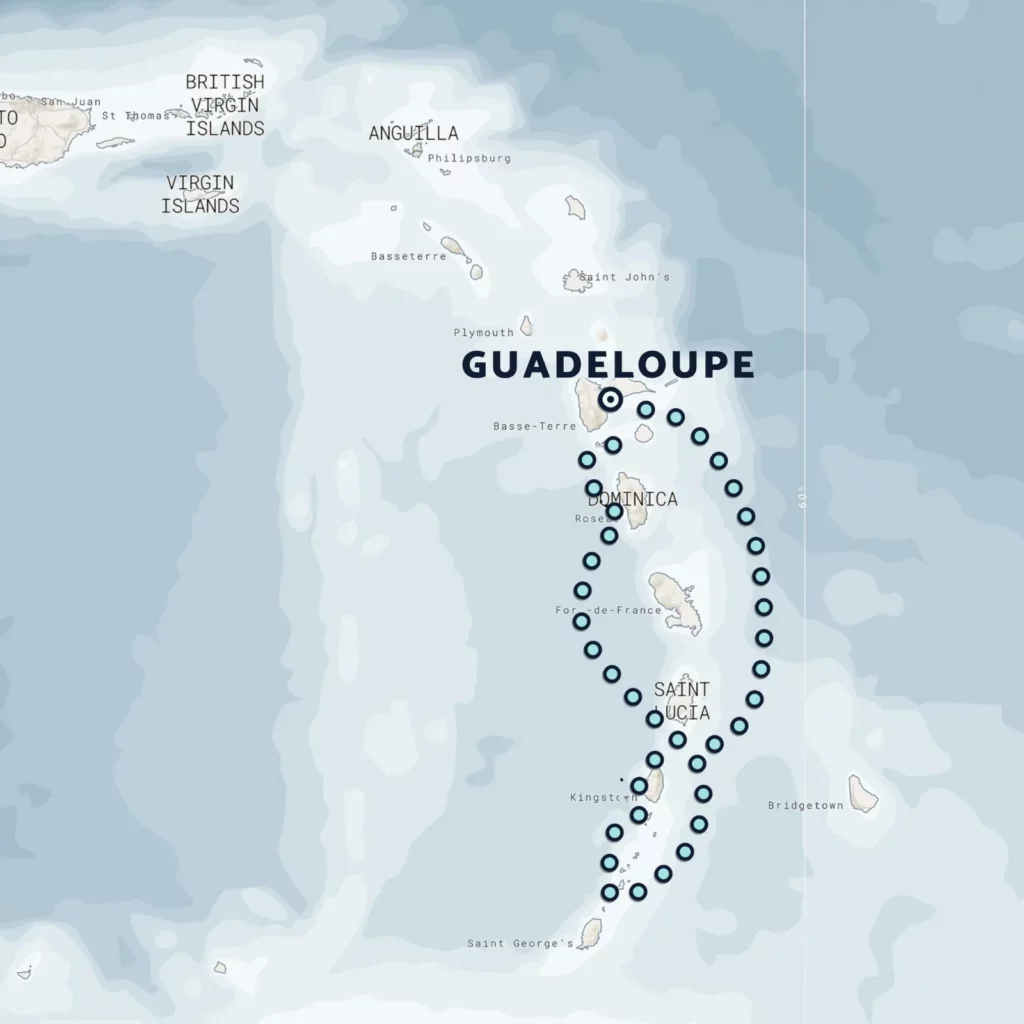
Windward Islands
- ~ 500 nm
- 14 days
- Offshore
–
- 8 free berths
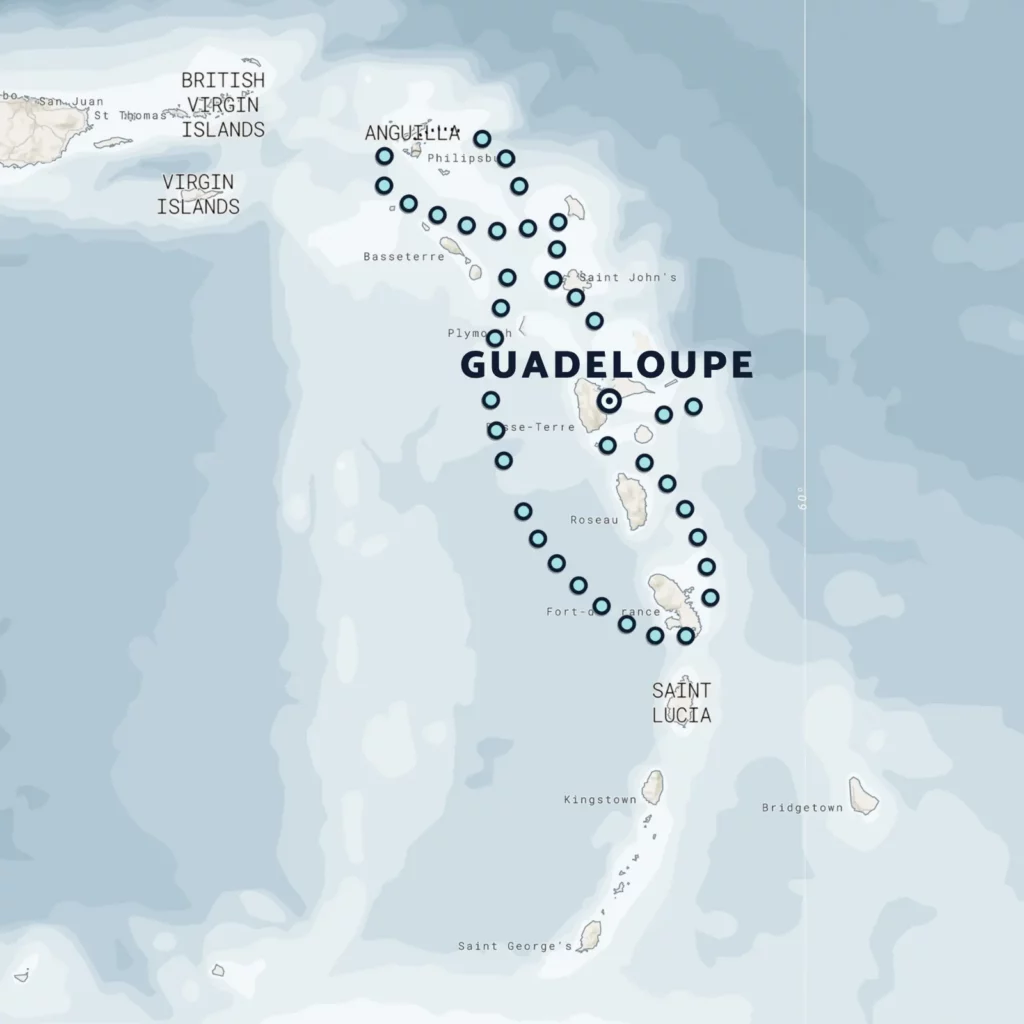
Leeward Islands
- ~ 500 nm
- 14 days
- Offshore
–
- 8 free berths
Live Tracker
Move around on the interactive map!
🗺️ Route planning
All planned routes will be under TRIPS Introducing our sailing trips. We sail from the northernmost to the southernmost point of Europe on individual one-way routes. Click on a route and learn more about your next sailing trip.
👣 Live tracking
Follow SY Imagine live during the sailing trips. (At) TRACKS We showcase all our sailing trips. Our current track is recorded along with the ship's position during the trip. Satellite communication transmits not only our position, course, and speed, but also the current weather conditions.