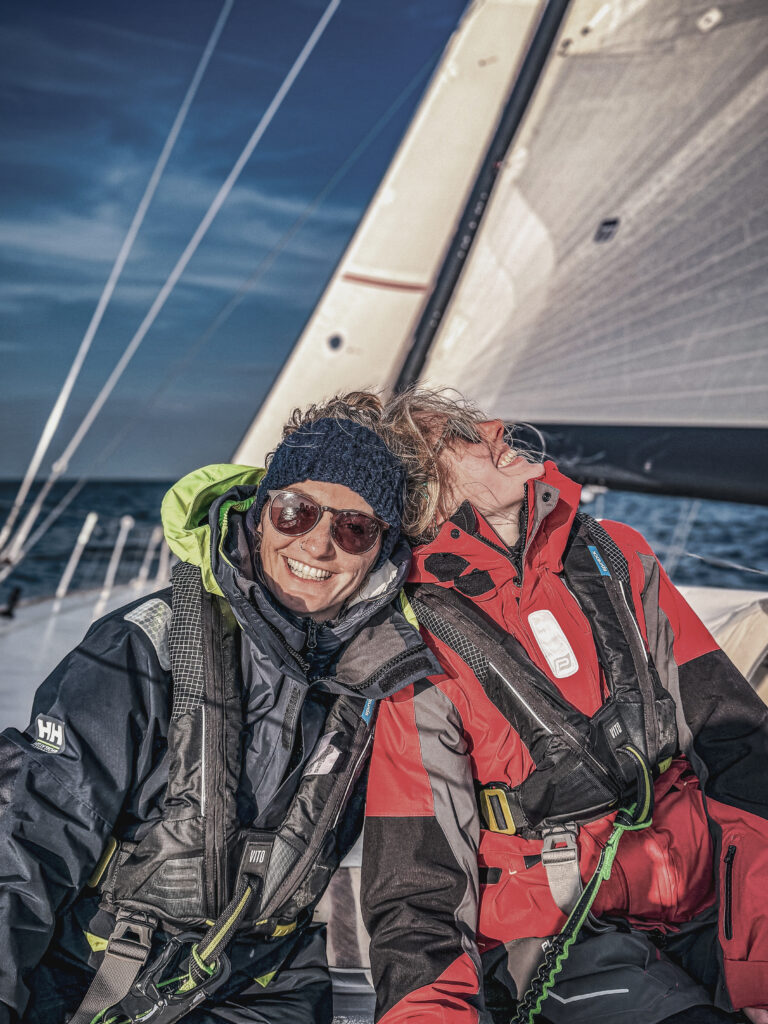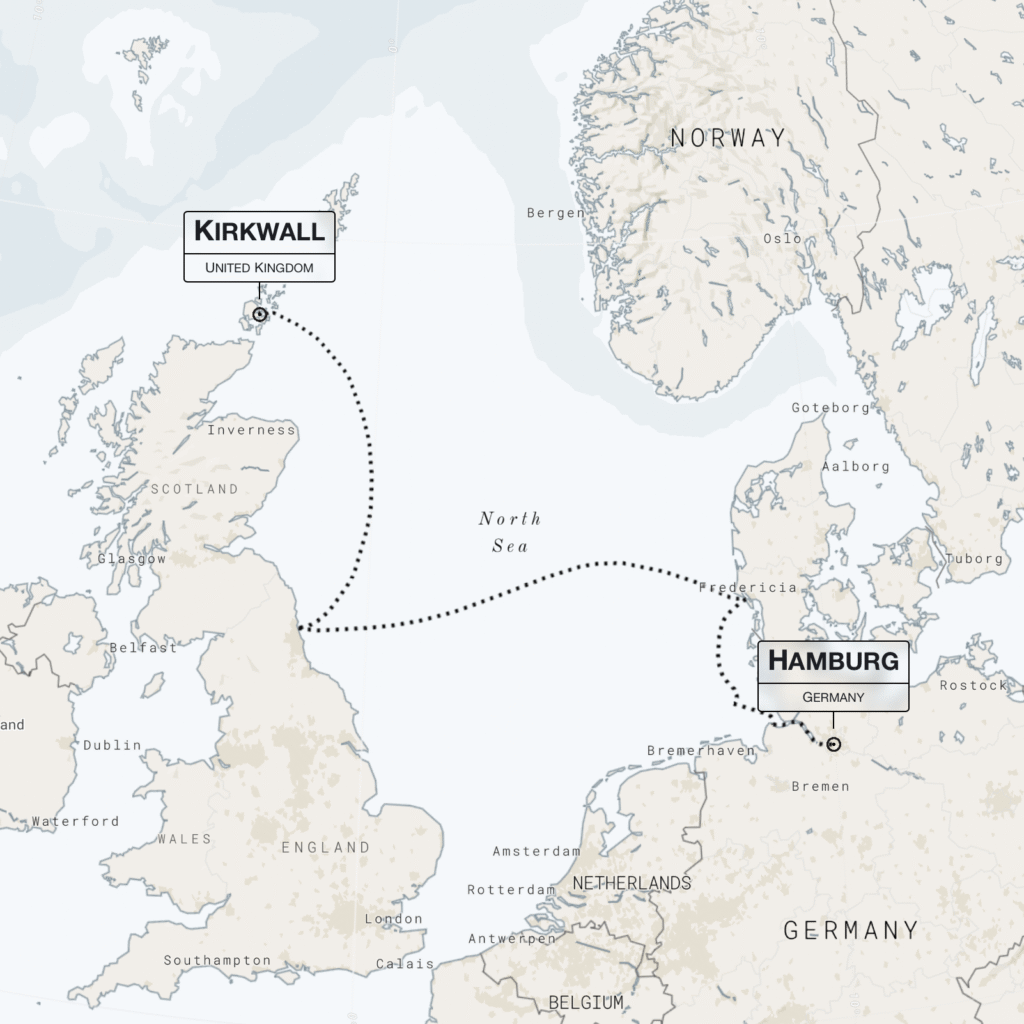


We begin our sailing trip in Kirkwall on the Orkney Islands, which will take us across the North Sea to Hamburg. On the Orkney Islands, we could, for example, sail from Kirkwall to Stromness first. There, we'll experience particularly challenging tidal currents, the likes of which we rarely see elsewhere. Several days are planned for this route as a weather buffer and to allow time to explore the Orkney Islands. We'll wait for a suitable moment before embarking on the multi-day, non-stop leg.
The North Sea offers a great variety of routes and presents a unique sailing challenge. We could, of course, sail non-stop from the Orkney Islands across the North Sea to the island of Heligoland. However, it will be much more exciting to employ clever weather navigation to optimally manage potential strong wind scenarios. This way, we can head for destinations on the Scottish/English side, such as Blyth, or even Denmark, for example Esbjerg, before sailing into the Elbe River. With particularly favorable weather conditions, even a trip to Norway is conceivable. The sailing challenges and potential strong wind scenarios on the North Sea should not be underestimated, even in summer.
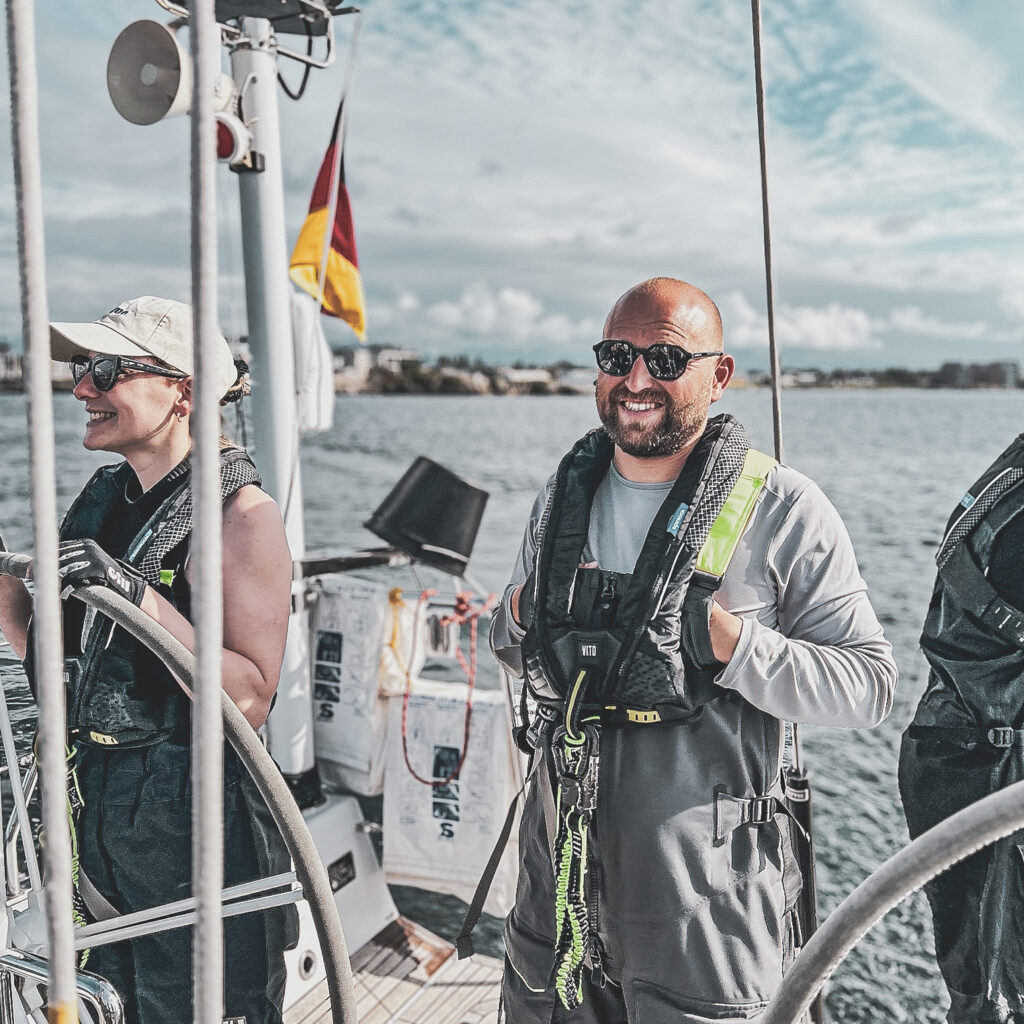
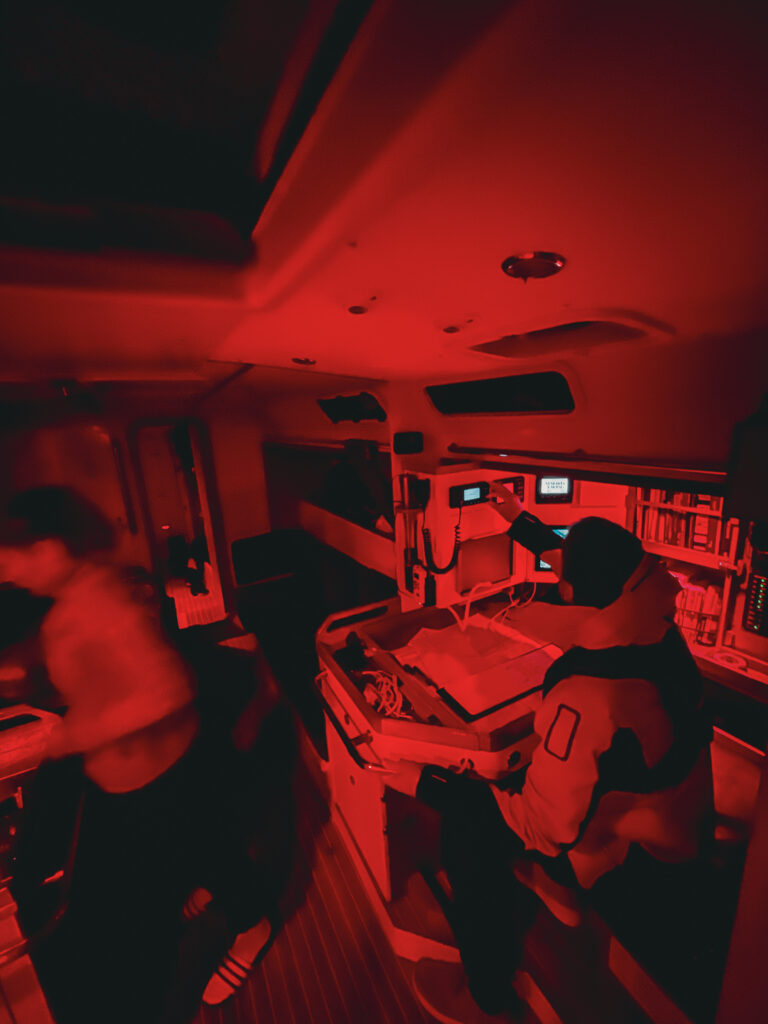
On multi-day passages, we sail continuously on a watch system, in which each crew member participates equally according to their different skills. This watch system allows us to fairly manage our sleep and distribute responsibilities for cooking and deck work. Several watch leaders are assigned to distribute responsibilities among the watches. This quickly establishes a comfortable routine of watches, navigation, and life on board.
Having arrived in Hamburg, we're moored in the City Sport harbor right next to the Elbphilharmonie. After all, we want to feel like we're discovering something, both on the open sea and in our destination ports. The entire passage is approximately 800 nautical miles long.